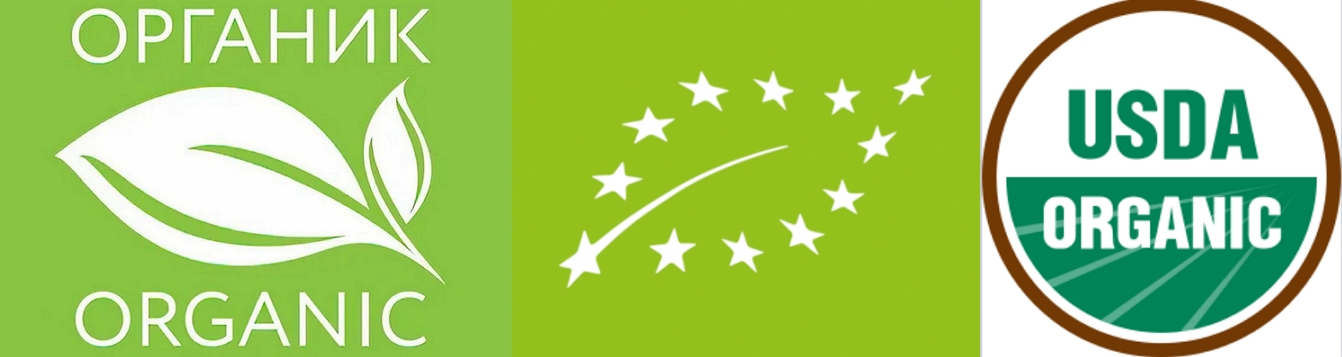
Organic certification labels on packaging aren’t just a pretty green leaf for marketing purposes. They are a legally protected symbol: it means that an independent, accredited body has inspected the producer and confirmed that the products were grown and processed according to strict standards—without synthetic pesticides, GMOs, antibiotics, or growth hormones. The difference between “eco,” “bio,” and “organic” as marketing terms and as actual certifications has already been explained in our article “Eco,” “Bio,” “Organic”: What’s the Difference? Here, we’ll focus on something else: exactly which official labels appear on packaging in different countries, what each one actually guarantees, and what to look for when reading the label.
Why Are Organic Labels Necessary at All?
In most countries, the word “organic” on a label isn’t just a descriptor—it’s a legal term, and its use without certification is prohibited or restricted by law. A government or industry certification mark on the packaging is a way for shoppers to quickly verify—without reading the ingredients list or delving into the legislation—that the product has undergone independent verification. Each label has its own regulatory body, its own standard, and its own required percentage of organic ingredients that must be met in order to display the label.
United States: USDA Organic
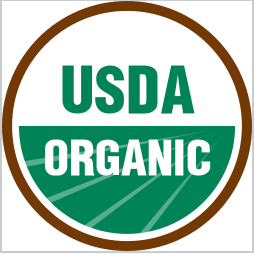
One of the world’s most recognizable organic labels is the green-and-white circular USDA Organic label, issued by the U.S. Department of Agriculture (USDA) through a network of accredited certifying organizations. Not just any product with the word “organic” on its packaging can use it—U.S. regulations have three levels:
- “100% Organic”—all ingredients are organic (except for water and salt); the USDA label may be used.
- “Organic”—at least 95% organic ingredients; the label is also permitted.
- “Made with Organic Ingredients”—at least 70% organic ingredients, but the USDA organic seal itself cannot be displayed on the packaging; only the wording “Made with Organic Ingredients” is permitted in the ingredient list.
The name of the certifying body is usually listed on the packaging next to the logo—this is another way to verify authenticity.
European Union: “Euroleaf”
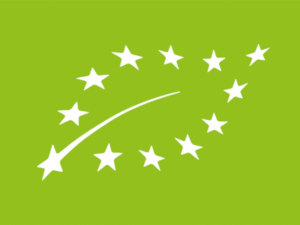
Among European organic labels, the most important is the single mandatory label that has been in effect in the EU since July 2010: a green leaf composed of twelve white stars on a leaf background (it is unofficially called the “Euroleaf”). It is mandatory for all packaged organic products produced in EU countries and requires at least 95% organic ingredients. According to the rules, the code of the certifying body and an indication of the origin of the raw materials (“EU Agriculture,” “Non-EU Agriculture,” or a specific country) must appear next to the label. At the same time, national labels from individual countries—such as the German hexagonal Bio-Siegel or the French AB—are often displayed in addition to the pan-European label.
Russia: the unified state organic certification mark
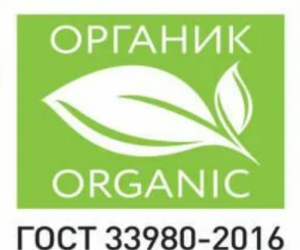
Among the organic labels recognized in Russia, the primary one is the state label, which is issued only to producers listed in the official registry.
In Russia, this area is regulated by Federal Law No. 280-FZ “On Organic Products…,” which has been in effect since January 1, 2020. The law established a uniform definition of “organic products” and a single state label, the rights to which belong to the Russian Ministry of Agriculture. To obtain the label, a producer must undergo certification according to the GOST R 33980-2016 standard through an accredited body and is then included in the official state registry of organic producers. We explained in detail how this system works and why the OrganicHub catalog lists only producers from this registry in our article “How Organic Status Is Verified in Russia.” The main rule of thumb for consumers is the same as with international labels: if the label says “organic” without a reference to a certificate and without the producer being listed in the Ministry of Agriculture’s registry, it is most likely just a marketing ploy rather than a verified status.
Other Countries: Almost Everywhere Has Its Own Labeling System
Most major food producers and importers have their own organic certification systems and labels:
- Japan—the JAS Organic (Japanese Agricultural Standard) label, a green circular emblem; without it, the word “organic” on packaging in Japan is prohibited by law.
- Canada — the bilingual “Canada Organic / Biologique Canada” label featuring a maple leaf, regulated by the Canadian Food Inspection Agency.
- China — the “China Organic” label, a green circle with Chinese characters; one of the world’s strictest in terms of documentation requirements and batch traceability.
- India — the green square “India Organic” label under the National Programme for Organic Production (NPOP).
- Switzerland — the Bio Suisse label (a bud on a green background) — one of the oldest in the world; its standards are, in some respects, stricter than those of the European Union.
Equivalence agreements exist between some systems—for example, the USDA Organic certification is in many cases recognized as equivalent to the European and Canadian labels, and vice versa, which simplifies the export of organic products. But this is not a universal rule: equivalence must be verified separately for each pair of countries and each product category; the labels do not automatically substitute for one another.
How to Avoid Mistakes When Reading a Label
Two simple guidelines apply almost everywhere in the world, including Russia:
- A genuine organic label is the name of a specific regulatory body or standard (USDA, Euroleaf, GOST R 33980-2016, JAS, and so on), not an abstract word or the manufacturer’s own logo featuring a green leaf.
- Next to the label, you’ll usually find the code of the certifying body or the registry number—these are the details you can verify in public sources if you wish.
On OrganicHub, only products and companies officially listed in the Russian Ministry of Agriculture’s state registry are included in the product catalog and the “Producers” section—information about each producer’s certification can be viewed directly on their profile page.
Leave a Reply