Category: Uncategorized

  • How Russia Verifies the Organic Status of Products

    In Russia, the production of organic products is regulated by Federal Law No. 280-FZ “On Organic Products…,” which took effect on January 1, 2020. The law introduces a unified definition of “organic products” and establishes a single state label for such products.

    To obtain organic status, a producer must undergo certification for compliance with the interstate standard GOST 33980-2016 “Organically Produced Products” through an accredited certification body. The standard restricts or prohibits the use of chemical pesticides, synthetic fertilizers, GMOs, antibiotics, and growth hormones, and also establishes requirements for animal welfare and soil protection.

    After successful certification, the producer is included in the unified state registry of organic producers, which is maintained by the Russian Ministry of Agriculture. The OrganicHub catalog is based on the data from this registry: we list only those producers who have actually undergone official state certification.

    For shoppers, this means that if a producer is listed in the OrganicHub catalog, their products have undergone independent verification and are legally entitled to be labeled as “organic.”

  • "Eco," "bio," "organic": What's the difference, and how to make the right choice

    "Eco," "bio," "organic": What's the difference, and how to make the right choice

    Labels such as “eco,” “bio,” “natural,” and “organic” are appearing more and more frequently on packaging—and it’s easy for shoppers to get confused about how they differ from one another. In fact, only one of these terms is protected by law in Russia; manufacturers can use the others practically at their own discretion.

    Which Term Is Protected by Law

    The word “organic” (and its derivatives—“organic” and “organic”) in Russia is regulated by Federal Law No. 280-FZ “On Organic Products” and GOST 33980-2016. To use this label, a manufacturer must undergo certification by an accredited body and obtain the right to display the unified state organic product mark on the packaging. Any consumer can check whether a manufacturer is listed in the registry—for example, through the OrganicHub catalog, which lists certified companies.

    What About “Eco” and “Bio”?

    However, the terms “eco,” “bio,” “environmentally friendly,” and “natural” are not regulated by law. Virtually any manufacturer can use them—no mandatory verification is required. Sometimes such labeling truly reflects a conscientious approach to ingredients and production, and other times it’s simply a marketing ploy to make the product seem more appealing and expensive.

    How to Make the Right Choice

    The most reliable way to distinguish genuine organic products from those with just a pretty label is to look for the government organic certification mark and the registration number in the unified registry on the packaging, rather than relying solely on the words “eco” or “bio.” It’s also helpful to check the certifying body and the certificate’s expiration date, as well as whether the packaging lists a specific manufacturer rather than just a generic brand.

    What Does the OrganicHub Catalog Have to Do With This?

    This is exactly why we’ve compiled this catalog—so that shoppers don’t have to decipher the fine print on the packaging themselves. The OrganicHub catalog features manufacturers that have undergone official certification under Federal Law No. 280-FZ, along with details about their certificates and product ranges. If you want to buy truly organic products—not just those with attractive packaging—check out the “Producers” section—it features only verified companies.

  • Organic Product Labels Around the World—and How They Differ

    Organic Product Labels Around the World—and How They Differ

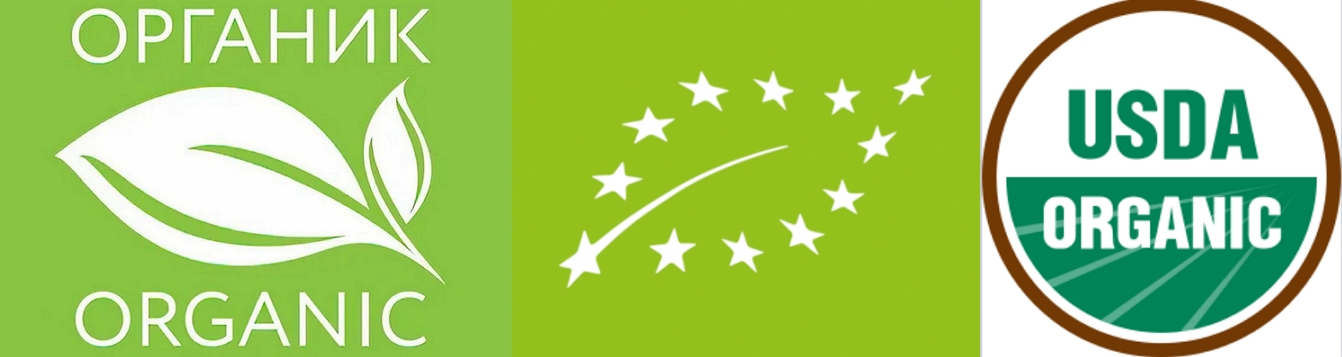
    Organic certification labels on packaging aren’t just a pretty green leaf for marketing purposes. They are a legally protected symbol: it means that an independent, accredited body has inspected the producer and confirmed that the products were grown and processed according to strict standards—without synthetic pesticides, GMOs, antibiotics, or growth hormones. The difference between “eco,” “bio,” and “organic” as marketing terms and as actual certifications has already been explained in our article “Eco,” “Bio,” “Organic”: What’s the Difference? Here, we’ll focus on something else: exactly which official labels appear on packaging in different countries, what each one actually guarantees, and what to look for when reading the label.

    Why Are Organic Labels Necessary at All?

    In most countries, the word “organic” on a label isn’t just a descriptor—it’s a legal term, and its use without certification is prohibited or restricted by law. A government or industry certification mark on the packaging is a way for shoppers to quickly verify—without reading the ingredients list or delving into the legislation—that the product has undergone independent verification. Each label has its own regulatory body, its own standard, and its own required percentage of organic ingredients that must be met in order to display the label.

    United States: USDA Organic

    One of the world’s most recognizable organic labels is the green-and-white circular USDA Organic label, issued by the U.S. Department of Agriculture (USDA) through a network of accredited certifying organizations. Not just any product with the word “organic” on its packaging can use it—U.S. regulations have three levels:

    • “100% Organic”—all ingredients are organic (except for water and salt); the USDA label may be used.
    • “Organic”—at least 95% organic ingredients; the label is also permitted.
    • “Made with Organic Ingredients”—at least 70% organic ingredients, but the USDA organic seal itself cannot be displayed on the packaging; only the wording “Made with Organic Ingredients” is permitted in the ingredient list.

    The name of the certifying body is usually listed on the packaging next to the logo—this is another way to verify authenticity.

    Официальный знак USDA Organiс
    The official USDA Organic seal (U.S. Department of Agriculture)

    European Union: “Euroleaf”

    Among European organic labels, the most important is the single mandatory label that has been in effect in the EU since July 2010: a green leaf composed of twelve white stars on a leaf background (it is unofficially called the “Euroleaf”). It is mandatory for all packaged organic products produced in EU countries and requires at least 95% organic ingredients. According to the rules, the code of the certifying body and an indication of the origin of the raw materials (“EU Agriculture,” “Non-EU Agriculture,” or a specific country) must appear next to the label. At the same time, national labels from individual countries—such as the German hexagonal Bio-Siegel or the French AB—are often displayed in addition to the pan-European label.

    Европейский знак органической продукции «евролист»
    The European Union’s unified organic label (“Euroleaf”)

    Russia: the unified state organic certification mark

    Among the organic labels recognized in Russia, the primary one is the state label, which is issued only to producers listed in the official registry.

    In Russia, this area is regulated by Federal Law No. 280-FZ “On Organic Products…,” which has been in effect since January 1, 2020. The law established a uniform definition of “organic products” and a single state label, the rights to which belong to the Russian Ministry of Agriculture. To obtain the label, a producer must undergo certification according to the GOST R 33980-2016 standard through an accredited body and is then included in the official state registry of organic producers. We explained in detail how this system works and why the OrganicHub catalog lists only producers from this registry in our article “How Organic Status Is Verified in Russia.” The main rule of thumb for consumers is the same as with international labels: if the label says “organic” without a reference to a certificate and without the producer being listed in the Ministry of Agriculture’s registry, it is most likely just a marketing ploy rather than a verified status.

    Единый государственный знак органической продукции России
    Unified State Label for Organic Products in Russia (GOST R 33980-2016)

    Other Countries: Almost Everywhere Has Its Own Labeling System

    Most major food producers and importers have their own organic certification systems and labels:

    • Japan—the JAS Organic (Japanese Agricultural Standard) label, a green circular emblem; without it, the word “organic” on packaging in Japan is prohibited by law.
    • Canada — the bilingual “Canada Organic / Biologique Canada” label featuring a maple leaf, regulated by the Canadian Food Inspection Agency.
    • China — the “China Organic” label, a green circle with Chinese characters; one of the world’s strictest in terms of documentation requirements and batch traceability.
    • India — the green square “India Organic” label under the National Programme for Organic Production (NPOP).
    • Switzerland — the Bio Suisse label (a bud on a green background) — one of the oldest in the world; its standards are, in some respects, stricter than those of the European Union.

    Equivalence agreements exist between some systems—for example, the USDA Organic certification is in many cases recognized as equivalent to the European and Canadian labels, and vice versa, which simplifies the export of organic products. But this is not a universal rule: equivalence must be verified separately for each pair of countries and each product category; the labels do not automatically substitute for one another.

    How to Avoid Mistakes When Reading a Label

    Two simple guidelines apply almost everywhere in the world, including Russia:

    1. A genuine organic label is the name of a specific regulatory body or standard (USDA, Euroleaf, GOST R 33980-2016, JAS, and so on), not an abstract word or the manufacturer’s own logo featuring a green leaf.
    2. Next to the label, you’ll usually find the code of the certifying body or the registry number—these are the details you can verify in public sources if you wish.

    On OrganicHub, only products and companies officially listed in the Russian Ministry of Agriculture’s state registry are included in the product catalog and the “Producers” section—information about each producer’s certification can be viewed directly on their profile page.

  • Why Are Organic Products More Expensive Than Conventional Ones?

    Why Are Organic Products More Expensive Than Conventional Ones?

    A shopper comparing prices for the first time between an organic store and a regular supermarket almost always asks the same question: What exactly are they paying for—the actual difference in production, or just marketing and the words on the packaging? Based on international price studies, Russian legislation, and our own data from the registry of certified producers.

    Exactly how much more expensive?

    There is no single figure stating that “organic is twice as expensive”—the range varies depending on the product category and country:

    • According to data from the U.S. Department of Agriculture (USDA, 2016), the markup on fresh organic fruits and vegetables ranges from 7% (spinach) to 82% (eggs).
    • In the United Kingdom, the average markup on organic products is about 89%, though the range varies widely by category: from 28% for coffee to 112% for free-range eggs (data from the Soil Association and FoodNavigator, 2016).
    • A study by the consumer association UFC-Que Choisir in France found a markup of 93% and specifically noted that only half of the price difference reaches the farmer—the rest goes to the retailer’s margin.
    • A study by Smith & Lin (Renewable Agriculture and Food Systems, 2008), based on actual purchase data from the Nielsen panel rather than surveys, provides more conservative figures: for 10 popular types of fresh fruits and vegetables, the markup averaged 13–36 cents per pound.

    Six reasons for the price difference

    1. Lower yields.
    Without synthetic fertilizers and pesticides
    ,
    organic farms yield on average 20–30% less per acre than conventional farms, and in some cases the gap reaches 44%. Yields on organic farms also fluctuate more significantly from year to year due to pests and diseases against which there is no chemical protection—farmers factor this risk into the price.

    2. More manual labor.
    Weeding and pest control without chemicals are often done by hand or using natural but less effective methods—this is significantly more expensive than automated agrochemicals.

    3. Certification is not a one-time expense but an ongoing cost.
    In Russia, “organic” status is protected by law (Federal Law No. 280-FZ “On Organic Products,” in effect since 2020) and is confirmed by an accredited certification body through entry into the official registry of the Ministry of Agriculture. This is not a mere formality: according to a registry dump we used to verify the producer profiles on our website, out of 854 historical records of certificates, only 334 have valid status, while 517 have been revoked (and another 3 have been suspended). In other words, more than half of all certificates issued to date are no longer valid: organic status must be regularly recertified, and this involves ongoing costs, not just an initial fee.

    4. There are no economies of scale.
    There are few organic farms in Russia—according to the same registry check as of October 14, 2026, there are about 370 unique TINs for certified producers nationwide. These are small, often family-run farms without the centralized logistics that make delivery more affordable for large agricultural holdings.

    5. Retail markup.
    As a French study showed, half of the price difference is often generated not on the farm but on the store shelf—retailers use organic labeling to increase their margins.

    6. Demand outpaces supply.
    This is particularly noticeable in Russia: there are few certified producers, while consumer interest in certified products is growing—a classic case where limited supply keeps prices high. For example, as of October 13, 2026, there were only three
    organic producers in the Rostov Region.

    How to Avoid Overpaying for a Buzzword

    An important caveat: not everything labeled “eco,” “bio,” or “organic” on the packaging means the same thing. In Russia, only the term “organic product” is legally protected, provided it is verified in the Ministry of Agriculture’s registry; the terms “eco” and “bio” are not regulated by law and may simply be marketing ploys. That’s exactly why, when making a choice, you should check not the wording on the label, but whether the manufacturer is listed in the official registry—that way, the price premium truly reflects a verified standard, not just the packaging.

    The OrganicHub catalog lists producers whose status is confirmed by the Ministry of Agriculture’s registry—complete with direct contact information, region, and a list of certified products—so that buyers can verify this for themselves rather than just taking someone’s word for it.


    Sources: USDA ERS (2009), Smith T.A., Lin B.-H.—Renewable Agriculture and Food Systems (2008, 23(3): 208–216), Economics Help, TechInsider.ru, AiF, Federal Law No. 280-FZ of August 3, 2018, “On Organic Products,” and a download of the Russian Ministry of Agriculture’s registry of certificates (October 13, 2026).

  • How to Choose Genuine Organic Honey: 7 Signs and Why Home Tests Aren't Enough

    How to Choose Genuine Organic Honey: 7 Signs and Why Home Tests Aren't Enough

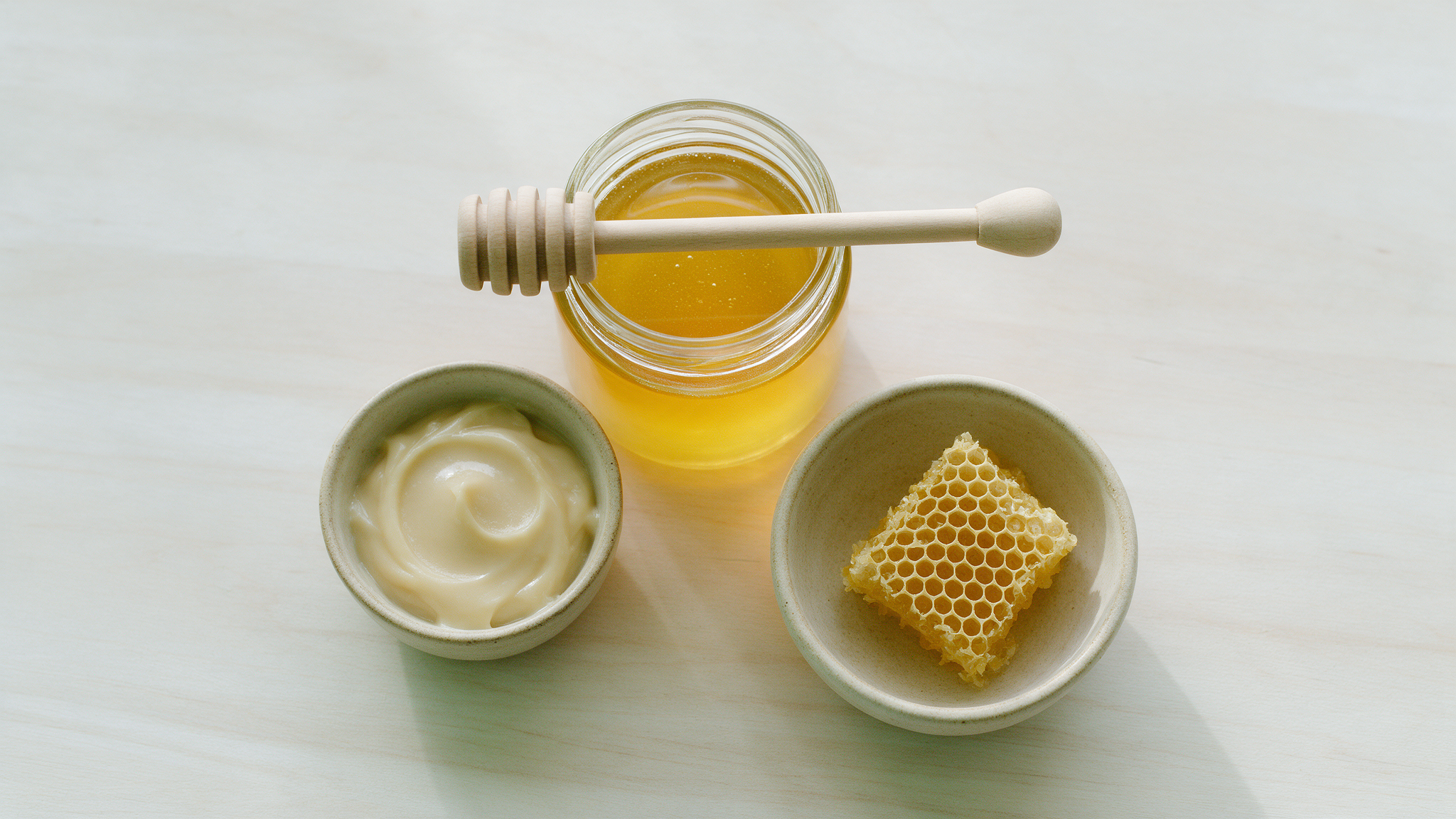
    Honey is one of the most commonly counterfeited products on store shelves. It’s diluted with water, old honey is remelted, different varieties are blended together, and sometimes it’s even replaced with sugar syrup. That’s why the question “how to choose real honey” is on many people’s minds—but it’s important to understand that natural honey and organic honey are not the same thing. Let’s take a closer look at both.

    7 things to look for when buying

    1. Consistency. Fresh honey has a uniform texture without sediment or separation. Crystallization is normal—it’s not a defect: the rate depends on the variety (sunflower honey thickens within a week, while linden honey can remain liquid for years). However, liquid honey in winter or spring is a cause for concern: it’s usually harvested from late spring through early fall.
    2. Viscosity. Fresh, mature honey flows from a spoon in a thin, continuous stream and forms a mound, with the last drop appearing to “spring back.” Immature honey flows quickly and runny.
    3. Aroma. High-quality honey smells of herbs and flowers. A lack of aroma or a sharp chemical odor is a bad sign (although a faint aroma in winter due to the cold is normal).
    4. Taste. Sweet, sometimes with a slight bitterness, it dissolves in the mouth without any noticeable sugar granules. A sour taste, a hint of mash, or a foamy aftertaste are signs of fermentation; a caramel aftertaste is a sign of overheating.
    5. Color. It should match the declared variety (buckwheat honey is dark, while acacia honey is light and almost transparent). If dark honey is being sold as linden honey, that’s a reason to ask the seller.
    6. Container weight. One liter of mature honey weighs 1.3–1.5 kg—an 800-ml jar should feel like it weighs about one kilogram when held in your hand.
    7. Documentation. You have the right to ask any seller for the apiary’s certification and laboratory test results, especially at a market or fair.

    Simple home tests (not foolproof, but they help spot obvious counterfeits)

    • A drop of honey on paper should not leave a wet, spreading stain—if it spreads, there is excess water in the mixture.
    • A spoonful of honey dissolved in a glass of warm water: slight cloudiness, floating wax or pollen, and propolis sediment are normal; any other sediment is a cause for concern.
    • A piece of bread dipped in honey: if it’s real honey, the bread stays firm; if it’s diluted with water, the bread gets soggy and falls apart.
    • Add a few drops of iodine to a solution of honey and water: if it turns blue, it indicates the addition of flour or starch.
    • Diluted honey with vinegar added: fizzing indicates the presence of chalk.

    All these methods detect only isolated, fairly crude irregularities—none of them replaces an official analysis. The most reliable option is documentation and lab tests obtained before the purchase.

    Why This Isn’t the Same as “Organic”

    Here’s an important point that’s often overlooked: all the signs and tests listed above only verify whether the honey is genuine—whether it’s been diluted with water, substituted with sugar syrup, or overheated. This is a matter of the product’s authenticity.

    “Organic” is a completely different, broader characteristic: it refers to exactly how the product was produced. For honey, this specifically means—not adulteration, but compliance with the rules of organic beekeeping as outlined in GOST 33980-2016: restrictions on the use of antibiotics and synthetic acaricides in treating bees; requirements for the apiary’s location away from pesticide-treated fields and industrial facilities; and the organic composition of the feed used to supplement the bees’ diet. Honey can be completely genuine (passing all home tests)—and yet not be organic if the apiary is not certified. Conversely, formal peculiarities—such as a liquid consistency in winter for a certified product—almost certainly indicate simply a different variety or storage conditions, rather than a counterfeit.

    How to Verify for Sure

    The only reliable way to ensure that honey is truly organic is to find the producer in the official registry of the Ministry of Agriculture or in our OrganicHub catalog, which is based on that registry. The catalog already lists 15 producers with honey and beekeeping products in their assortment, all with valid certification.

    View honey in the catalog →

    We’ve already discussed how “organic” differs from “eco” and “bio” and why organic products cost more—the same logic applies to honey: the label on the jar guarantees nothing; only verifiable certification does.

    Sources

  • How to Choose Organic Grains: What to Look for When Shopping

    How to Choose Organic Grains: What to Look for When Shopping

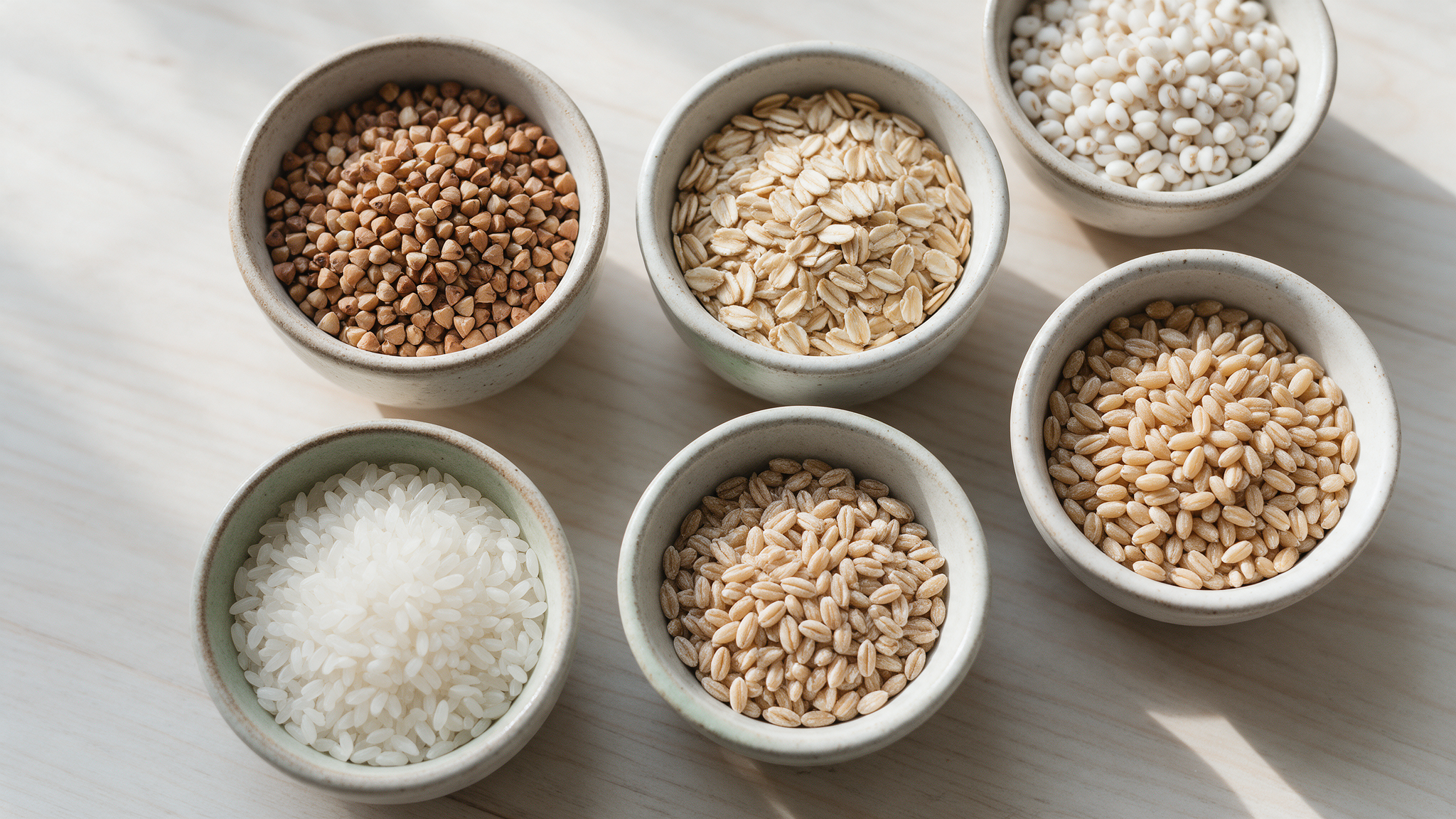
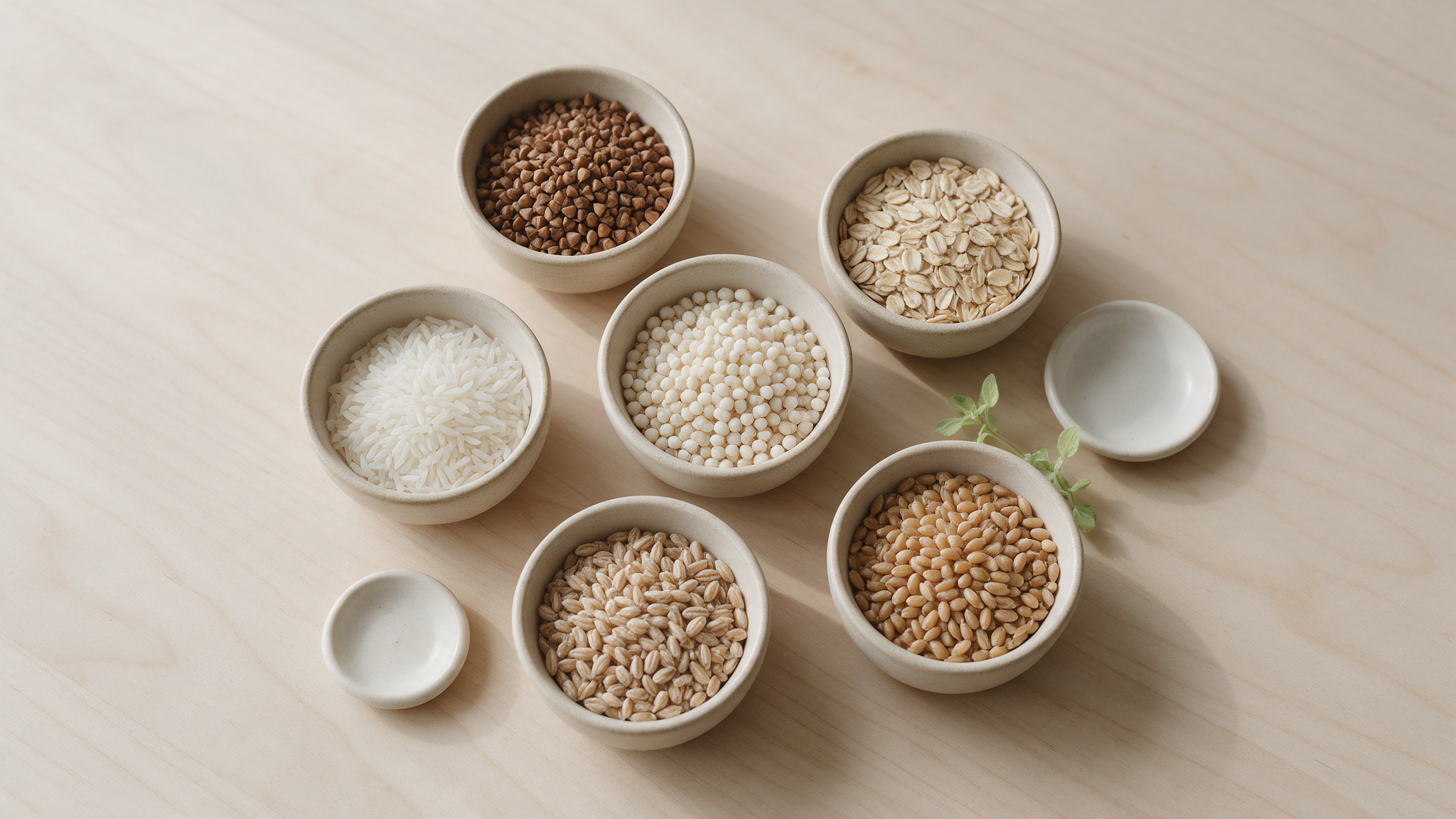
    Buckwheat, rice, oats, barley, and spelt—everyone has grains in their kitchen, which is exactly why people often pay less attention to them than, say, meat or dairy. But that’s a mistake: the quality of grains can easily be compromised by improper storage, and the word “organic” on the package doesn’t prove anything on its own. Let’s figure out how to tell good grains from a bad batch and how to make sure you’re actually getting a certified organic product—not just marketing hype.

    Крупы в керамических мисках: гречка, рис, овёс, перловка и полба

    What to Check Before Buying

    1. The “Organic” label and the registry number. The only legal confirmation of organic status in Russia is the state “Organic” label and the manufacturer’s entry in the registry of the Russian Ministry of Agriculture. This is established by Federal Law No. 280-FZ “On Organic Products…,” effective as of January 1, 2020. The terms “eco,” “natural,” and “farm-fresh” on the packaging are not regulated by law—they could mean anything from an honest farm to pure marketing.
    2. Package integrity. The package must be airtight, with no signs of moisture or condensation inside—this is the first indication that the grains were stored properly. Damp grains are a surefire path to mold and mycotoxins (including aflatoxins), which form specifically due to improper storage conditions, not during production.
    3. Production date and expiration date. The fresher the batch, the lower the risk of rancidity (especially with oat groats and flakes, which contain more fat) and the lower the chance of ending up with old, reclassified stock under a new label.
    4. Grain uniformity. High-quality groats consist of grains of uniform size and color, with a minimum of broken grains and foreign matter. Significant variations in size and color indicate poor sorting or the mixing of different batches.
    5. GOST or TU on the packaging. Russia has its own quality standards for groats—for example, GOST 5550 for buckwheat groats, GOST 6292 for rice groats, and GOST 3034 for oat groats. The presence of a GOST designation is not a guarantee of organic status, but it indicates that the manufacturer is willing to take responsibility for the grain’s quality parameters (impurity content, moisture content, color, and kernel integrity).
    6. Producer and region. Checking a producer against the Ministry of Agriculture’s registry is easier than it seems—on OrganicHub, each organization has a profile listing its certificate number and status.

    Simple at-home quality checks

    These tests help you assess the freshness and quality of a specific package of grains in your kitchen—but it’s important to understand that they don’t verify organic status; rather, they check the general quality and integrity of the batch. Organic status is confirmed only by a certificate and the registry, not by the smell or color of the grains.

    • Smell. Fresh grains have a neutral, slightly nutty smell. A sour, musty, or rancid smell (especially in oats and oatmeal—due to their high fat content) is a sure sign that the grains were stored improperly or for too long.
    • Check for insects. Small holes in the grains, spiderwebs, dust clumps, or actual bugs (bread beetles, flour beetles, grain moths)—return the grains to the store. This is a result of improper storage conditions at the warehouse or in the store.
    • The color of buckwheat. For buckwheat groats, color is a good indicator: lighter, less roasted groats usually mean gentler processing, while darker ones indicate intense heat treatment. Both types are edible, but if the manufacturer claims “organic” and gentle processing, it’s logical to expect a lighter, more delicate grind.
    • Check for debris and small stones. Pour a small amount of the groats onto a light-colored surface—this makes it easy to spot husks, small stones, or sand, which should not be present in a high-quality batch.
    • Amount of grain dust. If a lot of fine dust and crumbs have accumulated at the bottom of a transparent package, the grain has most likely been sitting in storage longer than it should have, or it has been transferred from one container to another multiple times.

    Organic doesn’t mean “just good”

    It’s easy to get confused here: high-quality, fresh, and “proper-looking” grains aren’t necessarily organic, and conversely, grains that don’t look very marketable may be fully certified. GOST standards for grains (5550 for buckwheat, 6292 for rice, 3034 for oats) regulate grain parameters—moisture content, impurity levels, color, and integrity—but do not address cultivation or processing methods. Organic status is a separate matter: the avoidance of synthetic pesticides and mineral fertilizers, GMO control, and separate logistics at all stages—from field to packaging—confirmed by an annual audit in accordance with GOST R 33980-2016 and Federal Law No. 280-FZ.

    Therefore, the only reliable way to verify the organic status of a specific package is to check the producer against the official registry of the Russian Ministry of Agriculture, rather than examining the grain against the light.

    Where to Buy

    The OrganicHub catalog features 57 products in the “Grains and Cereals” category—buckwheat, rice, oats, emmer, spelt, barley, and other grains from certified producers listed in the Russian Ministry of Agriculture’s registry. Each product lists the manufacturer and its certification status.

    View grains in the catalog →

    Read more

    Sources

    • Federal Law No. 280-FZ of August 3, 2018, “On Organic Products and on Amending Certain Legislative Acts of the Russian Federation” (garant.ru)
    • GOST 5550 “Buckwheat Groats” (meganorm.ru)
    • GOST 6292-93 “Rice Groats” (meganorm.ru)
    • GOST 3034-75 “Oat Groats” (meganorm.ru)
    • Roskachestvo: Study of Buckwheat Groats, 2024 (retail.ru)
    • Mycotoxins in Flour and Rice Due to Improper Storage (incrussia.ru)
    • Signs of Counterfeit Products in Rice Testing, Roskachestvo (new-retail.ru)
    • Why You Should Buy Light-Colored Buckwheat and How to Store It (altapress.ru)