
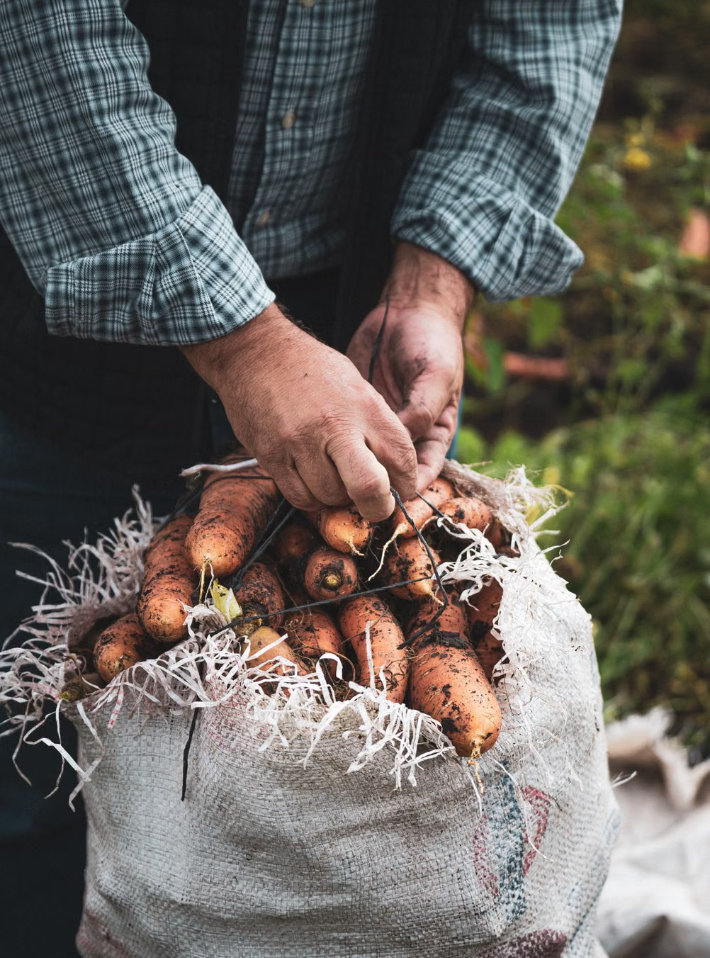
A shopper comparing prices for the first time between an organic store and a regular supermarket almost always asks the same question: What exactly are they paying for—the actual difference in production, or just marketing and the words on the packaging? Based on international price studies, Russian legislation, and our own data from the registry of certified producers.
Exactly how much more expensive?
There is no single figure stating that “organic is twice as expensive”—the range varies depending on the product category and country:
- According to data from the U.S. Department of Agriculture (USDA, 2016), the markup on fresh organic fruits and vegetables ranges from 7% (spinach) to 82% (eggs).
- In the United Kingdom, the average markup on organic products is about 89%, though the range varies widely by category: from 28% for coffee to 112% for free-range eggs (data from the Soil Association and FoodNavigator, 2016).
- A study by the consumer association UFC-Que Choisir in France found a markup of 93% and specifically noted that only half of the price difference reaches the farmer—the rest goes to the retailer’s margin.
- A study by Smith & Lin (Renewable Agriculture and Food Systems, 2008), based on actual purchase data from the Nielsen panel rather than surveys, provides more conservative figures: for 10 popular types of fresh fruits and vegetables, the markup averaged 13–36 cents per pound.
Six reasons for the price difference
1. Lower yields.
Without synthetic fertilizers and pesticides
,
organic farms yield on average 20–30% less per acre than conventional farms, and in some cases the gap reaches 44%. Yields on organic farms also fluctuate more significantly from year to year due to pests and diseases against which there is no chemical protection—farmers factor this risk into the price.
2. More manual labor.
Weeding and pest control without chemicals are often done by hand or using natural but less effective methods—this is significantly more expensive than automated agrochemicals.
3. Certification is not a one-time expense but an ongoing cost.
In Russia, “organic” status is protected by law (Federal Law No. 280-FZ “On Organic Products,” in effect since 2020) and is confirmed by an accredited certification body through entry into the official registry of the Ministry of Agriculture. This is not a mere formality: according to a registry dump we used to verify the producer profiles on our website, out of 854 historical records of certificates, only 334 have valid status, while 517 have been revoked (and another 3 have been suspended). In other words, more than half of all certificates issued to date are no longer valid: organic status must be regularly recertified, and this involves ongoing costs, not just an initial fee.
4. There are no economies of scale.
There are few organic farms in Russia—according to the same registry check as of October 14, 2026, there are about 370 unique TINs for certified producers nationwide. These are small, often family-run farms without the centralized logistics that make delivery more affordable for large agricultural holdings.
5. Retail markup.
As a French study showed, half of the price difference is often generated not on the farm but on the store shelf—retailers use organic labeling to increase their margins.
6. Demand outpaces supply.
This is particularly noticeable in Russia: there are few certified producers, while consumer interest in certified products is growing—a classic case where limited supply keeps prices high. For example, as of October 13, 2026, there were only three
organic producers in the Rostov Region.
How to Avoid Overpaying for a Buzzword
An important caveat: not everything labeled “eco,” “bio,” or “organic” on the packaging means the same thing. In Russia, only the term “organic product” is legally protected, provided it is verified in the Ministry of Agriculture’s registry; the terms “eco” and “bio” are not regulated by law and may simply be marketing ploys. That’s exactly why, when making a choice, you should check not the wording on the label, but whether the manufacturer is listed in the official registry—that way, the price premium truly reflects a verified standard, not just the packaging.
The OrganicHub catalog lists producers whose status is confirmed by the Ministry of Agriculture’s registry—complete with direct contact information, region, and a list of certified products—so that buyers can verify this for themselves rather than just taking someone’s word for it.
Sources: USDA ERS (2009), Smith T.A., Lin B.-H.—Renewable Agriculture and Food Systems (2008, 23(3): 208–216), Economics Help, TechInsider.ru, AiF, Federal Law No. 280-FZ of August 3, 2018, “On Organic Products,” and a download of the Russian Ministry of Agriculture’s registry of certificates (October 13, 2026).
Leave a Reply